Let’s Build What’s Next.
Connect with ECG to explore ingredients, partnerships, and future possibilities.
Expo Commodities Sri Lanka was established in 2014 with the aim of providing 100% transparent and traceable Ceylon spices and coconut products to the global food market. Although we began as a small trader, we are now one of the largest producers, processors, and exporters of natural and organic spices and coconut products in Sri Lanka. We work with 3200 farmers and have a processing capacity of 45,000 sq ft. Our certifications include Organic EU, NOP, JAS, ISO 22 000, and Fairtrade.
Sri Lanka is globally known as the “Spice Island” as we are one of the main suppliers of organic and natural spices to the global food market. The modern Sri Lankan spice industry evolved through four different stages: Arabian merchants (Before 1500), The Portuguese Age (1505), The Dutch Age (1640), and The British Age (1796).
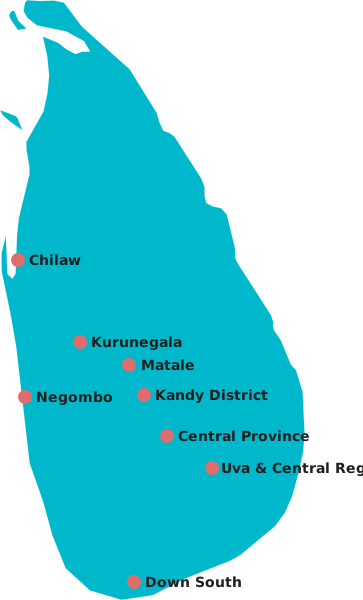
Uva & Central Region
Central Province
Kandy District
Kandy District
Down South & Matale
Negombo, Chilaw to Kurunegala
Spice sourcing involves finding and procuring quality spices from trustworthy suppliers.
Spice cleaning and sorting involve the removal of impurities such as stones or twigs, as well as grading by size and quality to ensure uniformity.
Spice drying is a process of removing moisture from fresh spices to improve their shelf life and concentrate their flavour.
Spices are sterilised to eliminate microorganisms, increase shelf life, and ensure their safety for use in food products.
Spice grinding is the process of crushing or pulverising whole spices to create a powder or paste, which enhances their flavour and aroma.
Spice analyzing evaluates quality, purity, and authenticity through various methods such as chromatography and microbiological testing.
Spice packing involves packaging and labelling spices to ensure their freshness, quality, and safety during storage and transportation.
Spice export involves complying with international regulations and organizing global shipping logistics.
Sourced directly from 40,000+ partner farmers across 5 origins — hover each card to reveal botanical names, growing regions, and available forms.